… Or ‘What Brother Bernard Did On His Holidays’.
After the mixed fortunes of a couple of storytelling gigs early in the summer, in Ludlow and Midsomer Norton (there are fresh shows planned for Halloween! Keep an eye on our socials for details!), a nostalgic tour of North Wales beckoned… First we enjoyed two nights in a hotel in Aberystwyth (my previous home, where I had not set foot since graduation precisely 24 years previously) then three nights in a caravan in Tal Y Bont, Barmouth, Ardudwy (where my family had a static caravan for every gods-damned holiday from the age of 5 to 18), and finally five nights under canvas, camping in Anglesey, the Isle of Mona itself.
Yes, it does sound a bit like a Channel 5 travel format without the celebrities.
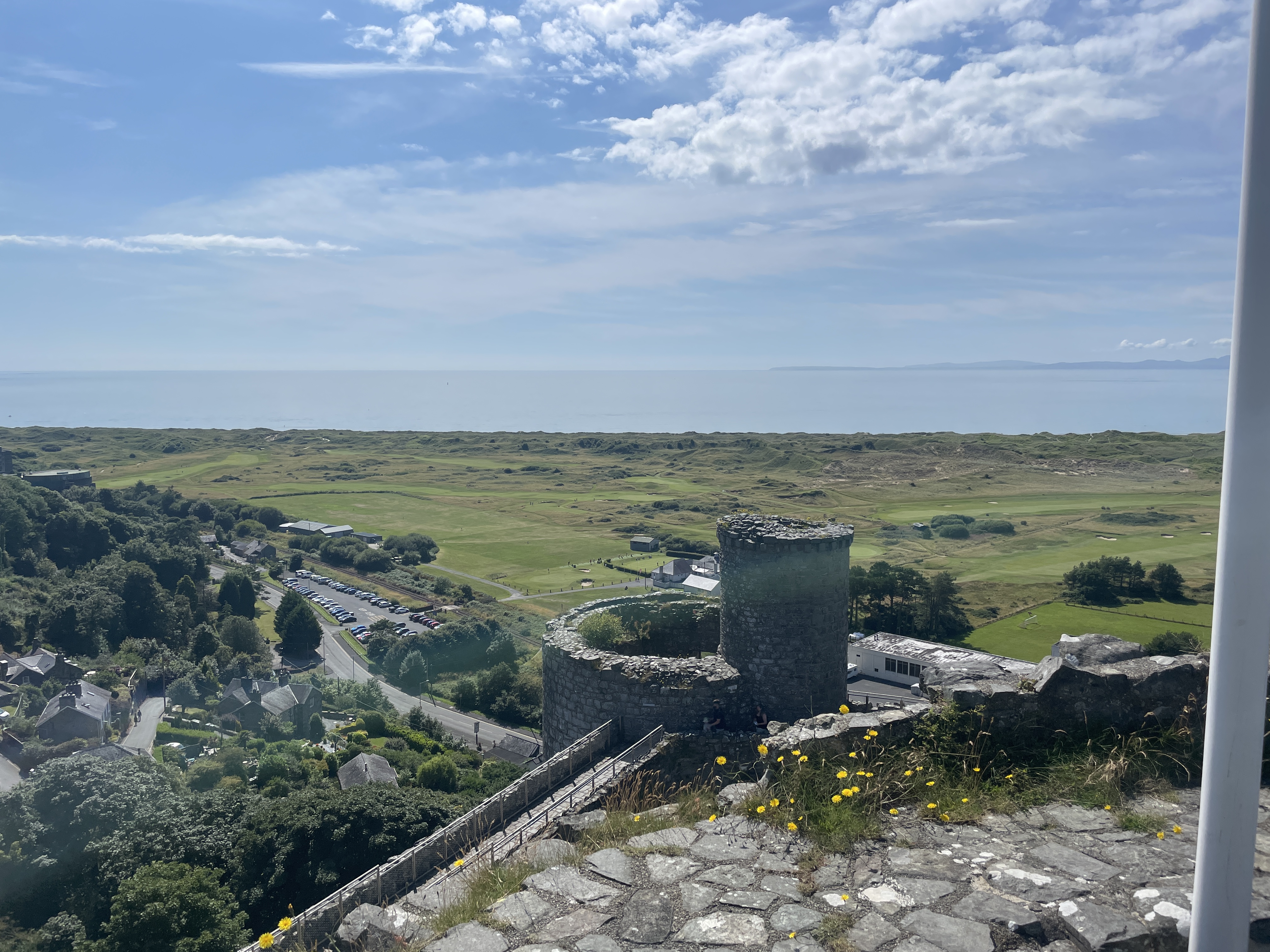
It was good to see that the legend of Bran the Blessed was given a modest spot in the limelight at Harlech Castle – they even have a brief live action depiction of the mighty King wading across the sea to Ireland. But as ever, being in the places where these ancient tales are set really does throw up so many angles on the legends that you stand no chance of imagining when just retelling the tale on stage, or in your study.
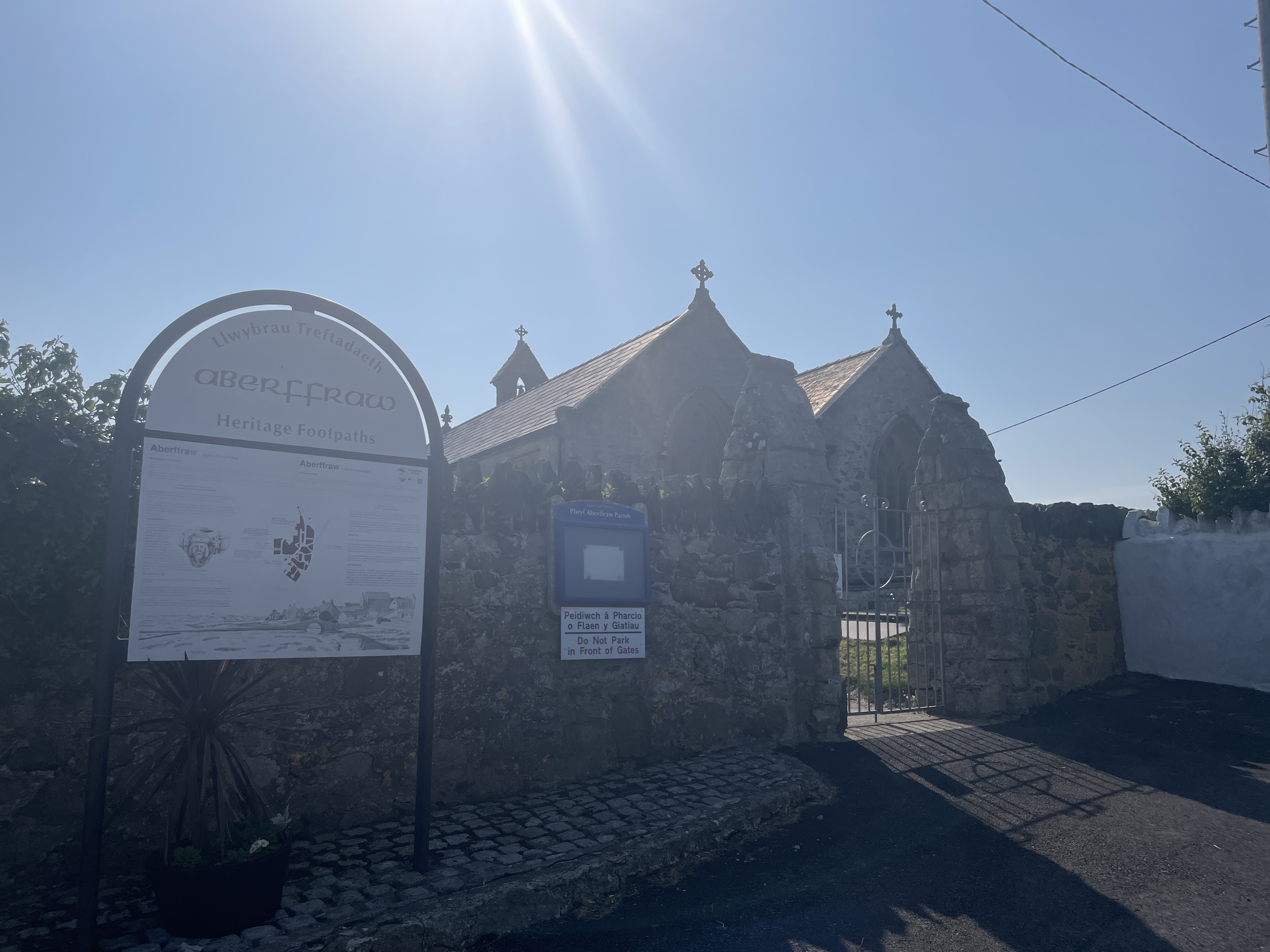
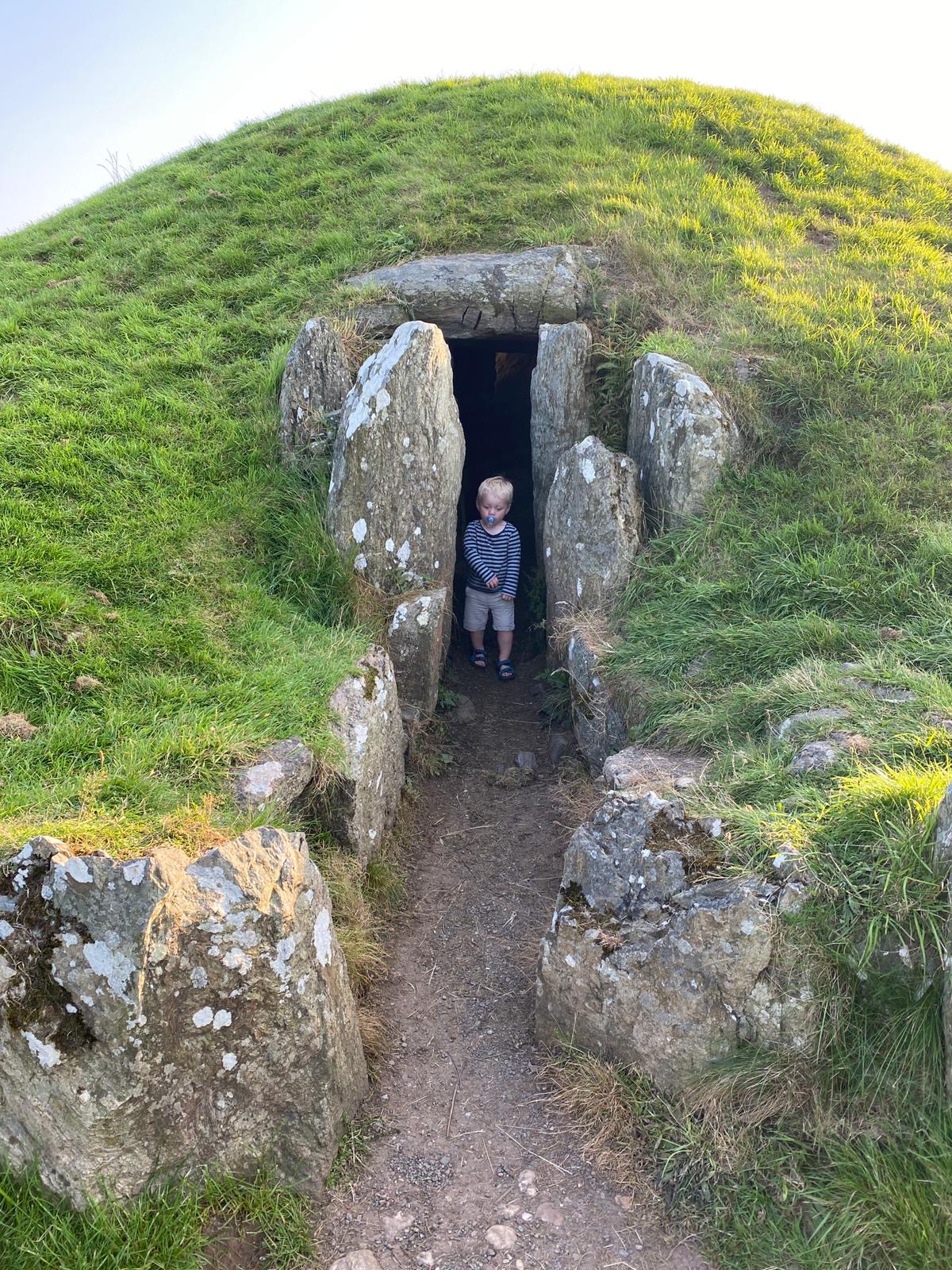
Journeying up to Aberffraw was a case in point – I wasn’t aware of the area’s history as the ancient seat of Welsh Kings, or its ties to the Bran legend, and how the return to Anglesey after war in Ireland and mystic chilling on the island of Gwales (which is mis-pronounced on the audiobook – it should be ‘Gwah-lis’, will re-record!) is such a crucial part of the story. And so we went to Aberffraw… only to find, of course, nothing of any note at all. You get used to there being very little left on Ynys Mona, those Romans were pretty damn thorough when it came to salting the earth of the sacred home of Druidism. Any possible historicity of Mabinogion legends would most probably set the narratives in Dark Age Cymru, but if Aberffraw really had been the seat of Kings, a load of houses had been built over the actual site long ago. Presumably there’s more tourism effort made on Scone, ancient cemetery of generations of Scottish nobility, than you’ll find at this Welsh equivalent. Anglesey does boast Bedd Branwen, supposedly the site of Bran’s sister’s grave (in the hopelessly misogynistic bit where she blames herself for literally everything that all the legend’s bloodshed and misery and kills herself, best forgotten), but it’s a Bronze Age burial site where dozens of people were laid to rest centuries before the arguable time of King Bran, so oceans of willing suspension of disbelief are required to factor that into your pilgrimage to legendary sites. We skipped it, and had shepherds pie.
Neverthefewer, and leaving aside the astounding shortage of Welsh people there seem to be in North Wales (We heard barely a single accent which wasn’t Liverpudlian or Lancastrian in the whole week), it was glorious just to wallow in the home of so many of Tales of Britain’s greatest stories. While there, although I never expected to get the entire ridiculous saga retold, a lot of work was done on our last Mabinogi story, ‘Culhwch & Olwen’, and I couldn’t resist the chance to film a new story while we were there on the beach…
Except, I had forgotten that I had already performed the Taliesin story as already published, so now this new version is a thorough update and extension of what was on reflection a far too flimsy version of the legend of Britain’s greatest bard in the first place. Don’t ask me why I only really wrote about the origin story and the magical animal chase, when it turns out that all the meat of the legend comes after that, but I’m glad to be able to share my new version at last.
Not least because the parallels between the ancient legend of Taliesin and the greatest creation of my favourite author, PG Wodehouse, made a mythological homage to Jeeves & Wooster utterly irresistible. Taliesin’s first aster, Prince Elffin, is a proto-Bertie Wooster if ever there was one, and our hero’s role as the ultimate perfect servant… well, watch the video to see for yourself.
And sorry about the singing. Cymru, fe’ch gwelaf eto yn fuan.
 Jem Roberts