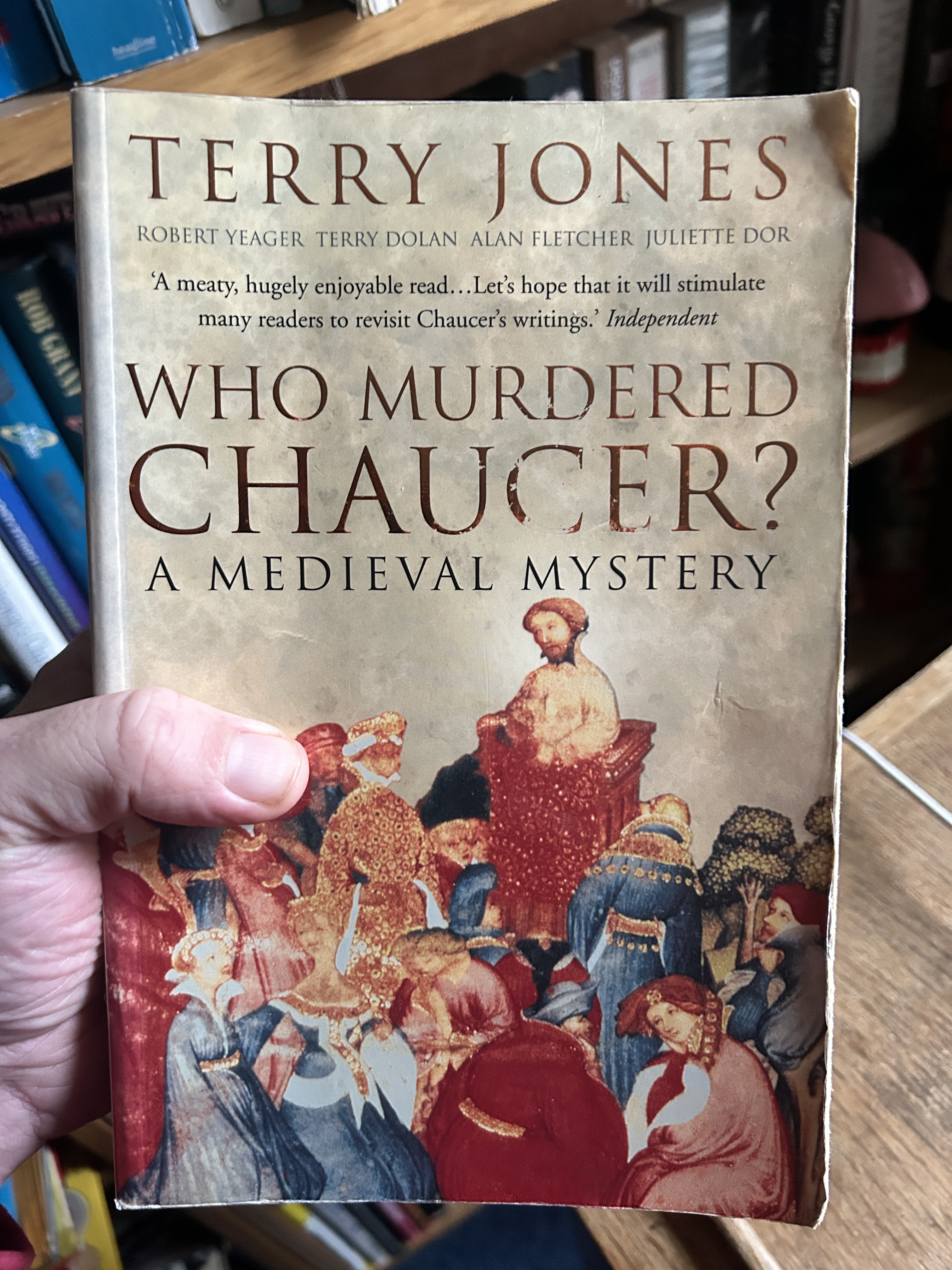
You see, as well as researching, editing, introducing and performing history books, I do actually read a few for pleasure from time to time – particularly if written by someone I have personally spent quality time with, who I happened to like rather a lot. And extra-specially if they happen to be a global comedy God.
Nonetheless, and despite receiving a signed copy of his ‘Barbarians’ and read it cover to cover, and enjoyed all his historical documentaries, this old copy of ‘Who Killed Chaucer?’ has been glowering on my shelf for at least a decade, unread. This may be partly due to grabbing hold of Terry’s book on Chaucer’s ‘Knight’s Tale’ when studying that text at university, and finding it surprisingly hard going in its medieval minutiae, with only the odd blast of muted Pythonesque bathos.
But I am so very glad that I have finally been moved to pluck this book off the crowded shelves, six years after losing the beloved author and almost the same amount again since we initially ‘lost him’, in a lesser but equally sad sense.
The reason being that this solid slab of historical detective work has spoken to me, in 2026, I think more than the author (and, I must hurry to credit, Jones’ co-authors Robert Yeager, Terry Dolan, Alan Fletcher and Juliette Dor) originally intended when he released it as a knowing (but entirely unspoken) allegory of The War Against Terror.
I will have to paint the picture in the most excruciatingly broad brushstrokes, but the gist of the history is that the fin de siècle burgeoning utopia of late 14th century Westminster, the white-hart-emblazoned court of Richard II and the literary salons he allowed to develop, was giving rise to lollardry and heresy – i.e. people at all levels of society daring to think just a little more clearly about the centuries of ludicrous dogma which had been synthetically larded over the original Christian ethos. Perhaps, for instance, the wafers and wine the priest hands out on a Sunday don’t literally turn into 1st century carpenter flesh, as the church swore everlasting damnation that it absolutely did. And of course, the dissemination of dangerously progressive thoughts in the English language that any prole could understand was one of the core dangers to the church’s supremacy. These were the very roots of rationality. But social progress was never going to help those at the top. War was more the ticket.
Therefore, in this narrative, the usurping Henry “the Fourth” Bolingbroke and his ruthless revenge-racked spin doctor Archbishop Thomas Arundle were progenitors of George W Bush and Donald Rumsfeld: the intoxifying forces of regression and aggression swooping in at a time of epochal hope and increasing social evolution to smash a tungsten-toe-capped boot down on the hippies and usher in a new era of chronic bloodshed and remorseless repression of any form of original thought. And back to Latin, if you please.
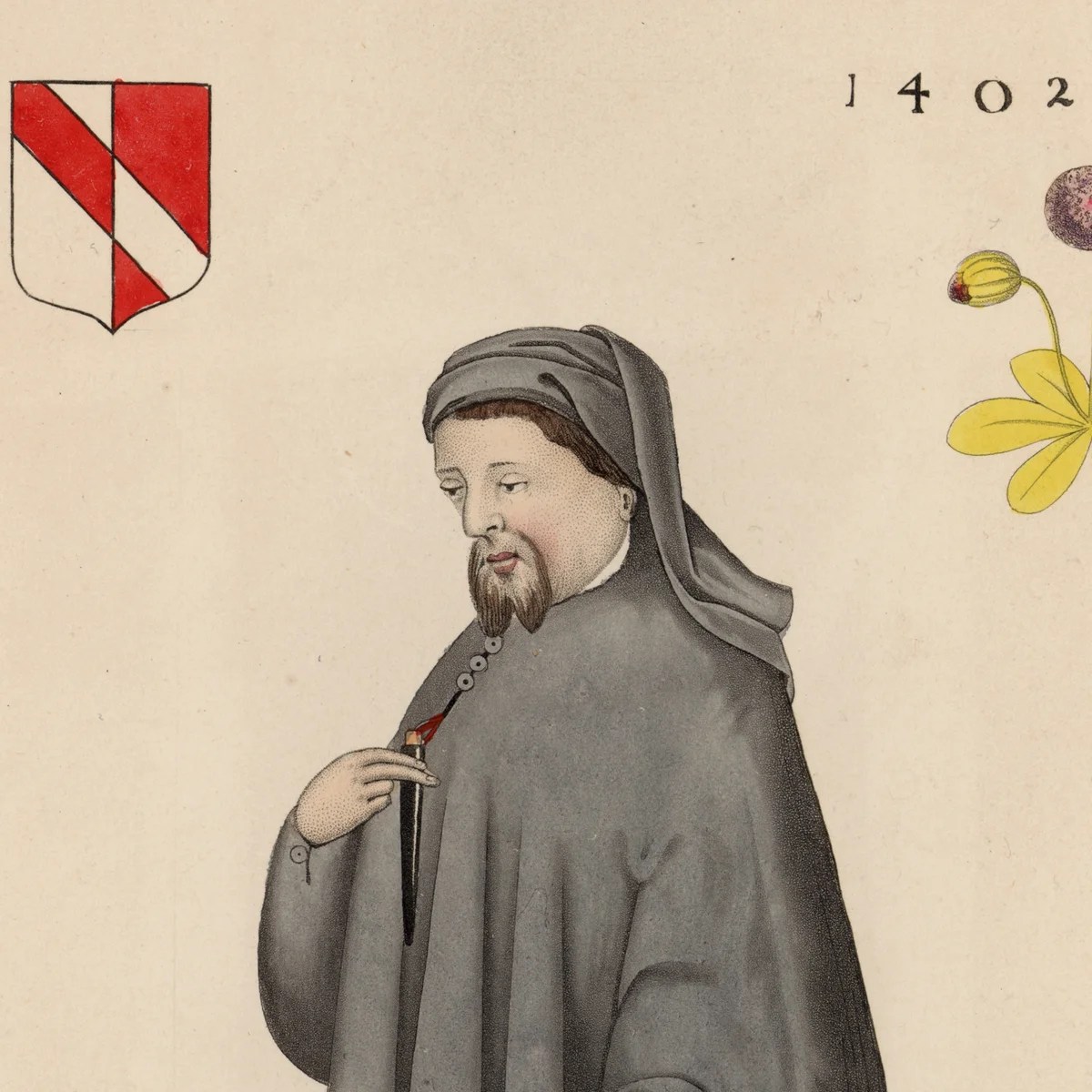
Arundle it was who the book directly accuses of using all the limitless powers at his fingertips to silence Chaucer before he could put the finishing touches to his masterwork The Canterbury Tales: the Fear & Loathing of the turn of the 1400s, satirising and cataloguing the whole breadth of medieval society in one vast, daring anthology of stories – a long-gestated project which had them rolling in the aisles when Richard wore the crown, but suddenly a irreversible evidence dossier of sedition and heresy. Just as Henry V would eventually use these brand new psychopathic laws against heresy to publicly boil his old pal Sir John (Falstaff) Oldcastle to death, it ultimately seems inadvisable to bet your last groat on Chaucer not coming to a less public sticky end.
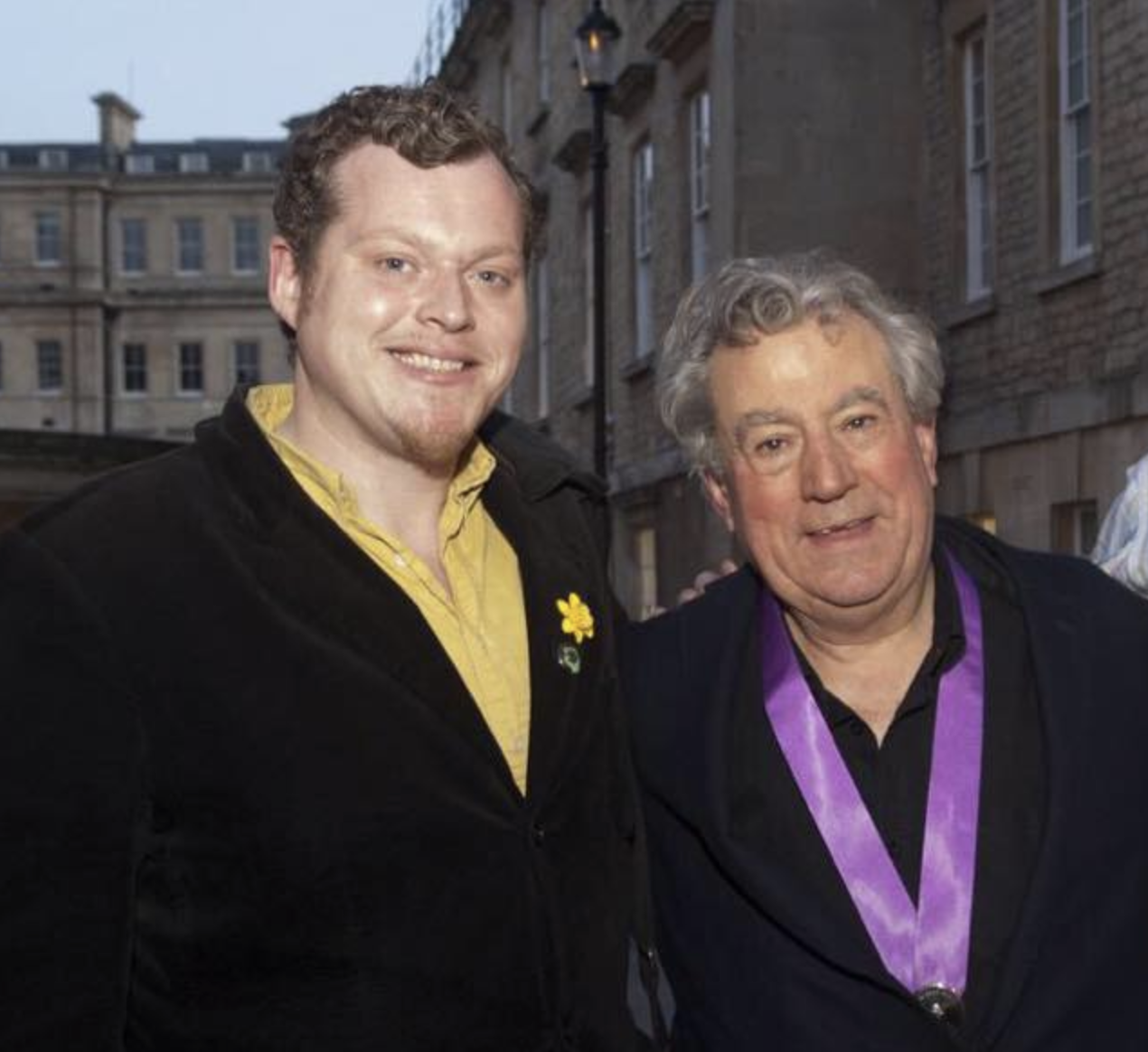
I remember Terry talking to me specifically about Arundle and his propaganda machine when I interviewed him for the True History sixteen years ago (“Uerrruum… I don’t think I ever saw Blackadder!”) as his toddler daughter crawled around his new but already sprawling library/study. At the time, my understanding of the period not reaching far beyond Henry IV Part 1, I could only follow his thread in general terms, about all historical propaganda, but all these years later, my grasp of the horror of the Bolingbroke usurpation and the fascistic junta it ushered in is much stronger, thanks to Terry’s lastingly gripping book.
I don’t know whether to feel oddly glad or inconsolable about the fact that Terry – the very best Python by every single measure – is no longer around to see just how devastatingly superseded his original historical allegory has become by 2026, and how darker and stronger the forces of international social regression on all fronts has become since he joined Geoffrey. But that’s what I was thinking about as the machinations of Arundle played out against the forces of enlightenment, of (relative, for the 1390s) peace and understanding – not Bush and TWAT, but Trump, MAGA, ICE, Farage, Reform, and the confected culture wars used to sow the maximum division among the majority opposing all of the above.
And of course, the bad guys always seem to win in the end – in the short run, certainly. History is the painful spectatorship of humanity’s dithering two-steps-forward-one-and-three-quarter-steps-back social progression since we slouched out of the swamp. True, it is pleasing to note (thanks to Wikipedia at least, sadly Terry’s book never takes the time to cathartically enjoy the fates of the accused murderers) that Tommy Arundle had a violent stroke around the time of Oldcastle’s cooking, and never spoke another word before dying shortly after – while everyone knows Bolingbroke essentially rotted away to a painful early death. But the promise of ever-increasing enlightenment which they snuffed out burned slowly for eons afterwards, as the British people were marched through the bagatelle of darkness and intermittent light from generation to generation. I’d estimate that right now we’re at least 16 years into a period of growing darkness, with a constant threat of the modern-day descendants of Bolingbroke and Arundle more ruthless than ever in the plans to send us all back to the Dark Ages. We have whole generations to whom the optimism of the Millennium seems like the Swinging Sixties, or the Garden of Eden.
But conversely, I’ve found it easy to actually take heart from Terry’s tour of the constant struggle of the backward draconian elite and the rest of us, over twenty years since publication, because – although I cannot claim to ever have been what you’d call a fan of Chaucer’s writing, besides a general amusement at the eternal filthiness of British comedy – in the very very long run, those bastards are derided dust (Arundle came very high in a recent Worst Ever Britons poll), and Geoffrey Chaucer is still adored by literature lovers the world over well over six hundred years on. Just as Terry Jones will be.
Just as those with any desire to read a decent book in English must have felt every time the town crier bellowed the news every morning that ‘THE KING IS DEAD’, we wake up every day to check the same old timelines, to hope against hope that… the good news we’re all waiting for… might finally have happened. We just have to hope to still be alive when the tide finally turns. We certainly deserve a seriously swinging 2060s after all this crap.
Until we become unlucky enough to keep losing the game so badly, for so long, that the other lot will actually finally succeed in destroying the entire world/species to slake their unnatural lusts, this is the utterly essential comfort that the study of History can give humanity – the bigger picture, the knowledge that History shows that the freedoms and liberties which do get pushed back and taken away from us, WILL eventually return stronger and more undeniable when better generations come along to remind us all what it means to be human.
Or, to put it another way, even in the darkest of ages…
I was strictly a comedy historian when I got to first interview Terry, of course, but with 4.5 volumes of History of Britain under my belt, and a pretty deep history of working on magazines including the BBC History mag and others, I am enjoying writing historical articles at the moment for Who Do You Think You Are Magazine’s Apple News channel. It’s frustrating that they’re behind a paywall, as I’m quite proud of the pieces as they pour out of me, and I’ve only had four out of over forty ideas commissioned to date, but no matter what, I will continue to try to do dear Terry J proud.
Thank you, Terry, for this unlikely cuddle of cathartic comfort so many years on. Please do join me in the schadenfreude of reliving the deaths of history’s greatest bastards – be it via Histories of Britain, or even Shakespeare’s Muses of Fire, or any historical rabbit hole which takes your fancy.
While we’re waiting – or, I should hope, agitating – for the next Great Leap Forwards, History allows us to fast-forward to the good bits.
splunge

